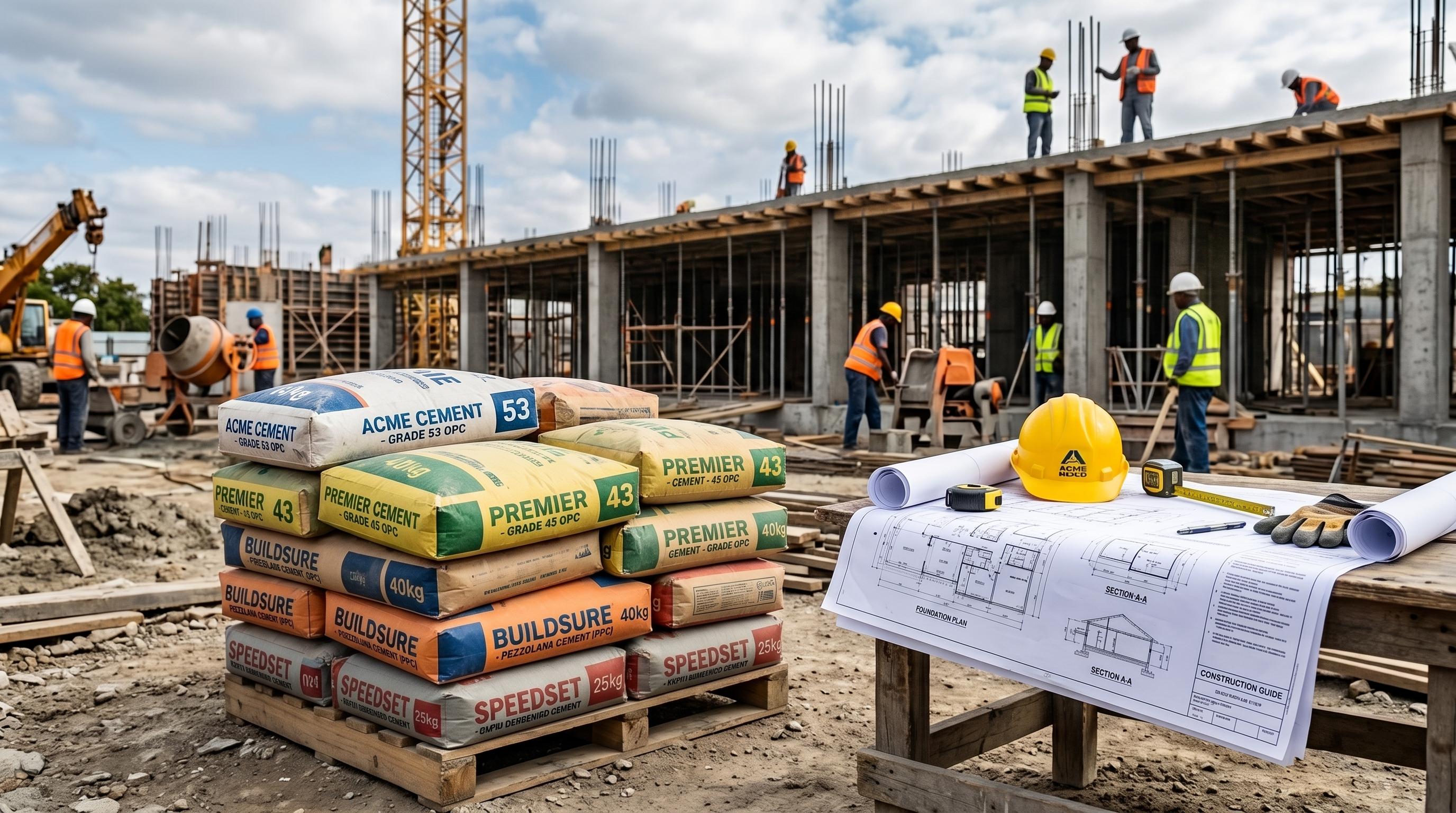
Walk into any building materials market and you will be offered cement by brand long before anyone mentions grade. Yet the grade printed on the bag tells you far more about whether it belongs in your project than the name on the front.
What the number actually means
The figure — 32.5, 42.5, 52.5 — is the minimum compressive strength in megapascals that a standard mortar sample must reach after 28 days of curing. A 42.5 cement is certified to reach at least 42.5 MPa at 28 days. It is a floor, not a promise of performance in your particular mix.
The letter that sometimes follows matters too. N denotes normal early strength and R denotes rapid early strength. A 42.5R gains strength faster in the first days, which helps when formwork must be struck early, but it also generates more heat as it cures.
Matching grade to element
32.5 — blockwork, plastering, screeding, and general non-structural work. Adequate where loads are modest and the finish matters more than strength
42.5 — the workhorse for structural concrete: columns, beams, suspended slabs and foundations on most residential and light commercial builds
52.5 — high-strength and precast applications, or where an engineer has specified it for a particular loading or exposure condition.
Why higher is not automatically better
Specifying 52.5 for a boundary wall is not caution, it is waste — and it can work against you. Higher-grade cements develop heat faster as they hydrate, and in large pours that thermal gradient encourages cracking. They are also less forgiving of poor curing discipline on site.
Strength on the bag is a starting point. Strength in the structure comes from the mix ratio, the water-cement ratio, compaction and curing — in that order.
Before you buy
Check that the bag carries a current standards mark and a legible production date. Cement is hygroscopic: it draws moisture from the air and loses strength over time even in a sealed bag. A bag more than three months old, or one that has gone lumpy under hand pressure, should not go into structural concrete.
Finally, confirm the grade against your structural drawings rather than against what is in stock. If a supplier offers a substitution, treat that as a question for your engineer, not a decision to make at the counter.